Eight years ago I started university and started racing triathlons for Dynamo Sports School in Kyiv. I came from cycling, so running was the new discipline for me. Training with power is standard in cycling, and I wanted that in running too.
There was really only one good running power meter back then: Stryd. It was a few hundred dollars. I was a broke engineering student. That math didn't work.
So I thought, why don't I just build one myself?
Why don't I just build one myself?
I was studying Computer Science, specializing in Biomedical Cybernetics, which was mostly computer vision for medical imaging. I got bored fast. Medicine is too constrained. There's not much room to be creative.
Building my own power meter was the opposite. That project is what actually pulled me into software engineering. I taught myself electronics, firmware, and signal processing as I went.
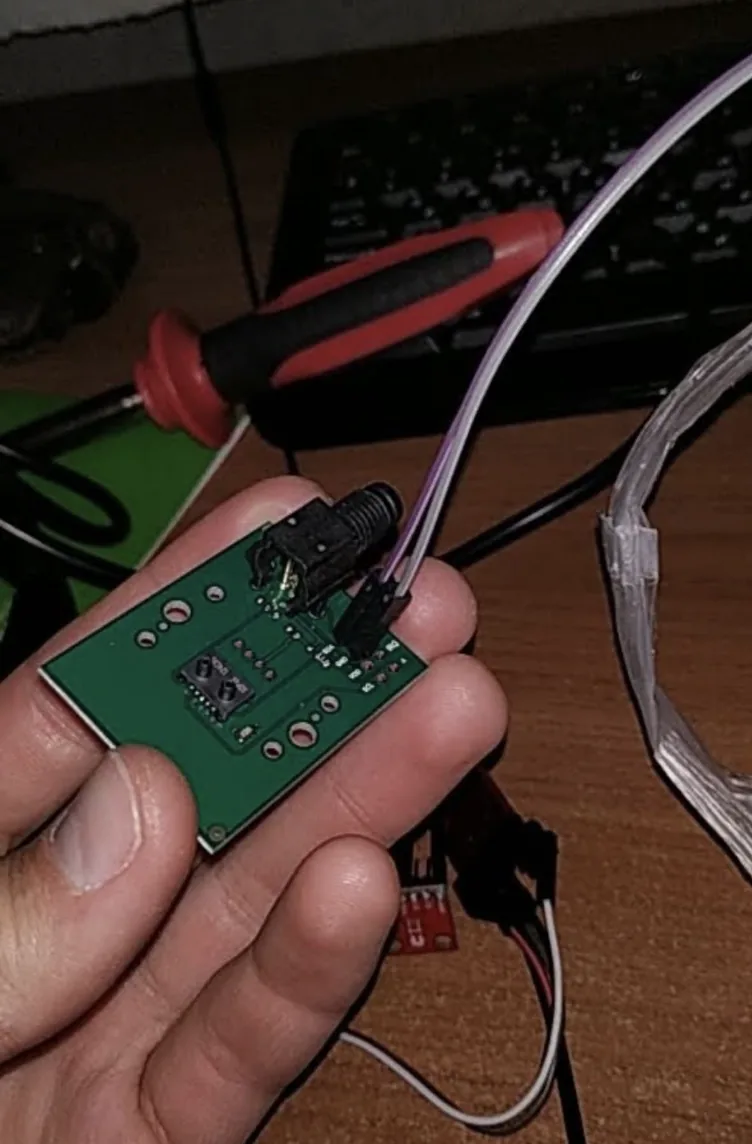
The first version was a small microcontroller, an accelerometer, and a differential pressure sensor. The idea was to measure motion and air drag, and turn both into running power.
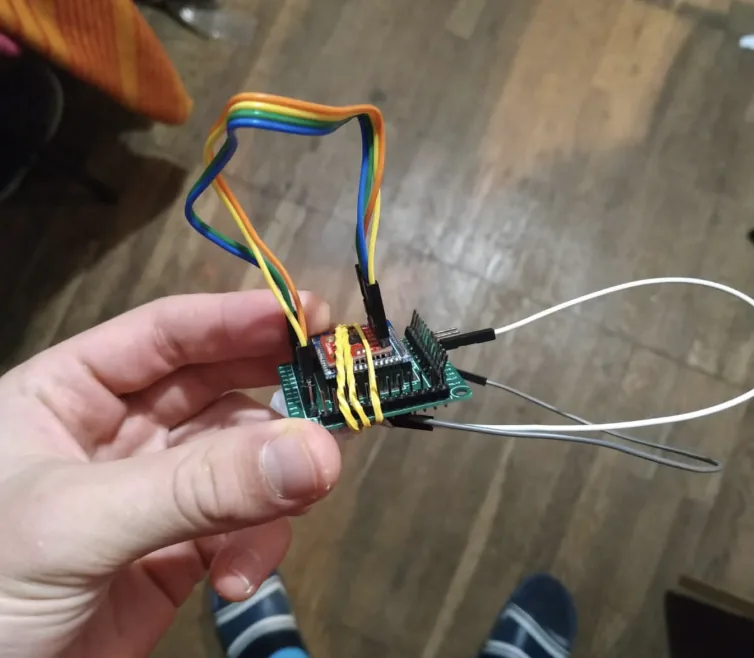
It did not go well.
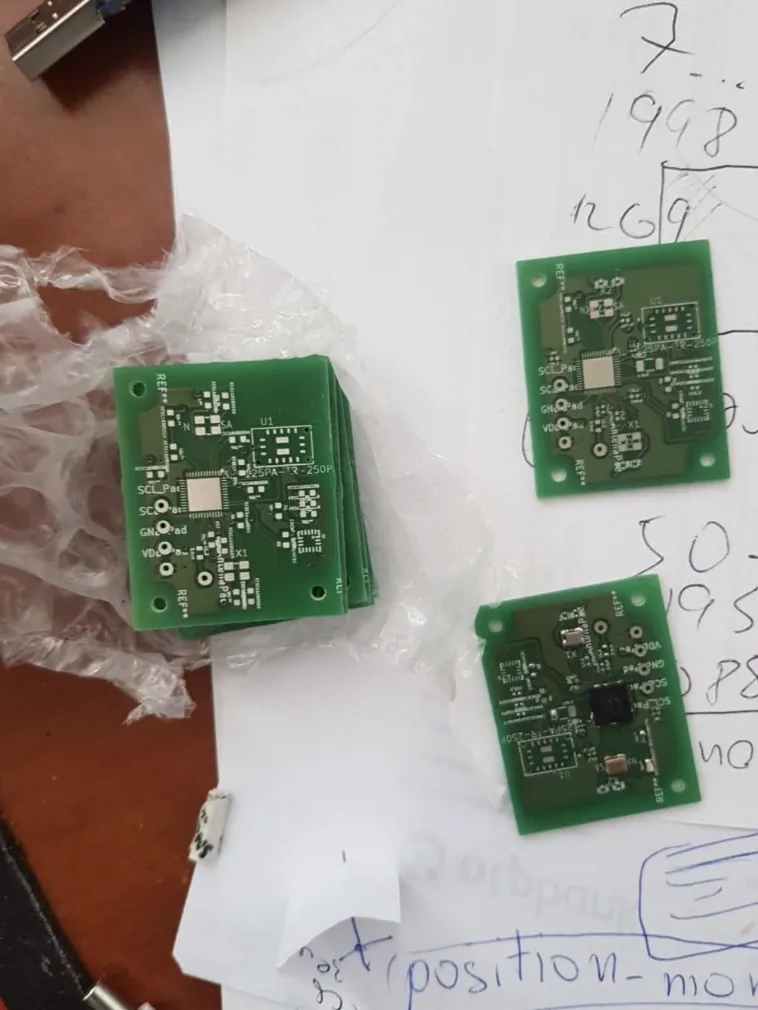
I spent months on it. Most of that time the numbers were garbage. I'd get a reading, dig into it, and find it was noise. I redesigned the board more times than I'd like to admit, and every revision meant ordering new PCBs and waiting weeks for them to show up.
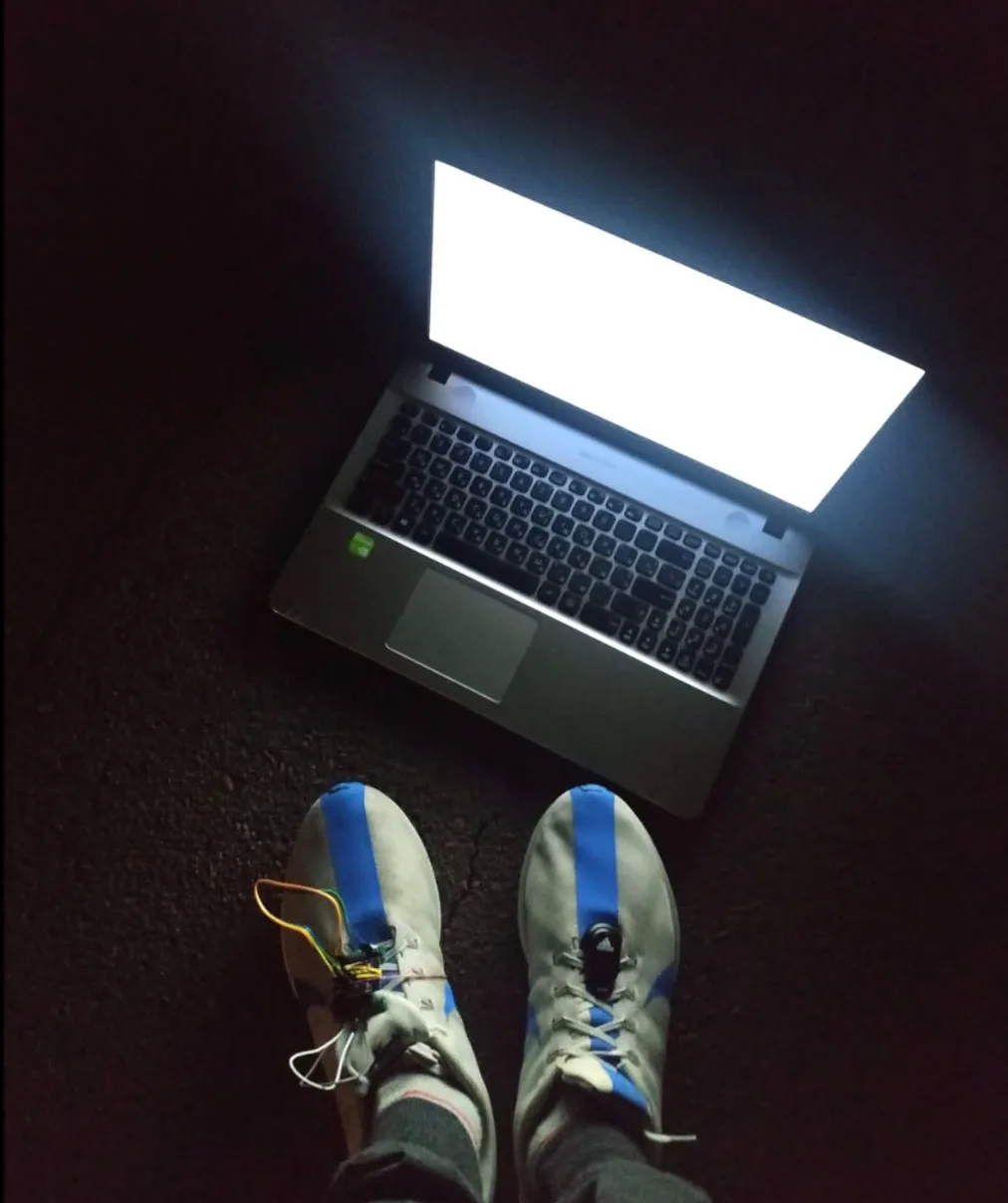
I tested at night, after class, on an empty track around 11 p.m. Laptop on the ground, sensor zip-tied to my shoe.
Eventually I got a rough power figure onto my smartwatch. Even getting it there was a fight: the watch spoke ANT+, an older protocol with no running-power profile and a real pain to work with, so I sent the number disguised as heart rate. It was barely accurate. But watching it appear felt unreal.
Then I hit the wall. I had no real hardware experience, and pulling body drag out of air pressure turned out to be its own dark art. Every small gain cost another board, more parts, more waiting. I almost gave up a few times. Eventually I put it down for good, and it stayed a personal experiment.
It did teach me one thing that stuck.
Custom hardware is often an artificial barrier.
It makes things expensive. It slows everything down. It keeps good technology away from most people.
For the next few years I worked as a software engineer, and that idea kept nagging at me. Whenever I had the choice, I built things that ran on hardware people already owned. Phones. GoPros. Whatever was already in their bag. Never another device to buy.
Then AirPods changed the math. Apple had quietly packed them with motion sensors good enough to actually measure how you move.
That was the moment. The sensor I spent months trying to build, I'd been carrying in my ears the whole time.
If I could get real sports metrics out of AirPods, close to a dedicated sensor, this was much bigger than running. Almost everyone has a phone. Plenty of people have AirPods. Why should they buy anything extra?
That became Kinapod.
Kinapod isn't one app. It's a bet that the devices people already carry can replace most dedicated sports sensors, if the software is good enough. Kinapod Disc, the AirPod flying-disc tracker, is the first piece we've shown publicly.
Eight years ago I wanted to build one affordable power meter. Now I don't think the future is more sports hardware. It's software that unlocks the hardware people already own.
Show the technical details
- Microcontroller: Nordic nRF52832
- Motion: 6-axis IMU (ST LSM6DS3)
- Aerodynamics: Sensirion SDP810 differential pressure sensor with pitot tubing
- Boards: custom PCBs, hand-assembled, several revisions
- Output: running power sent to a smartwatch over ANT+, disguised as heart rate (ANT+ has no running-power profile)